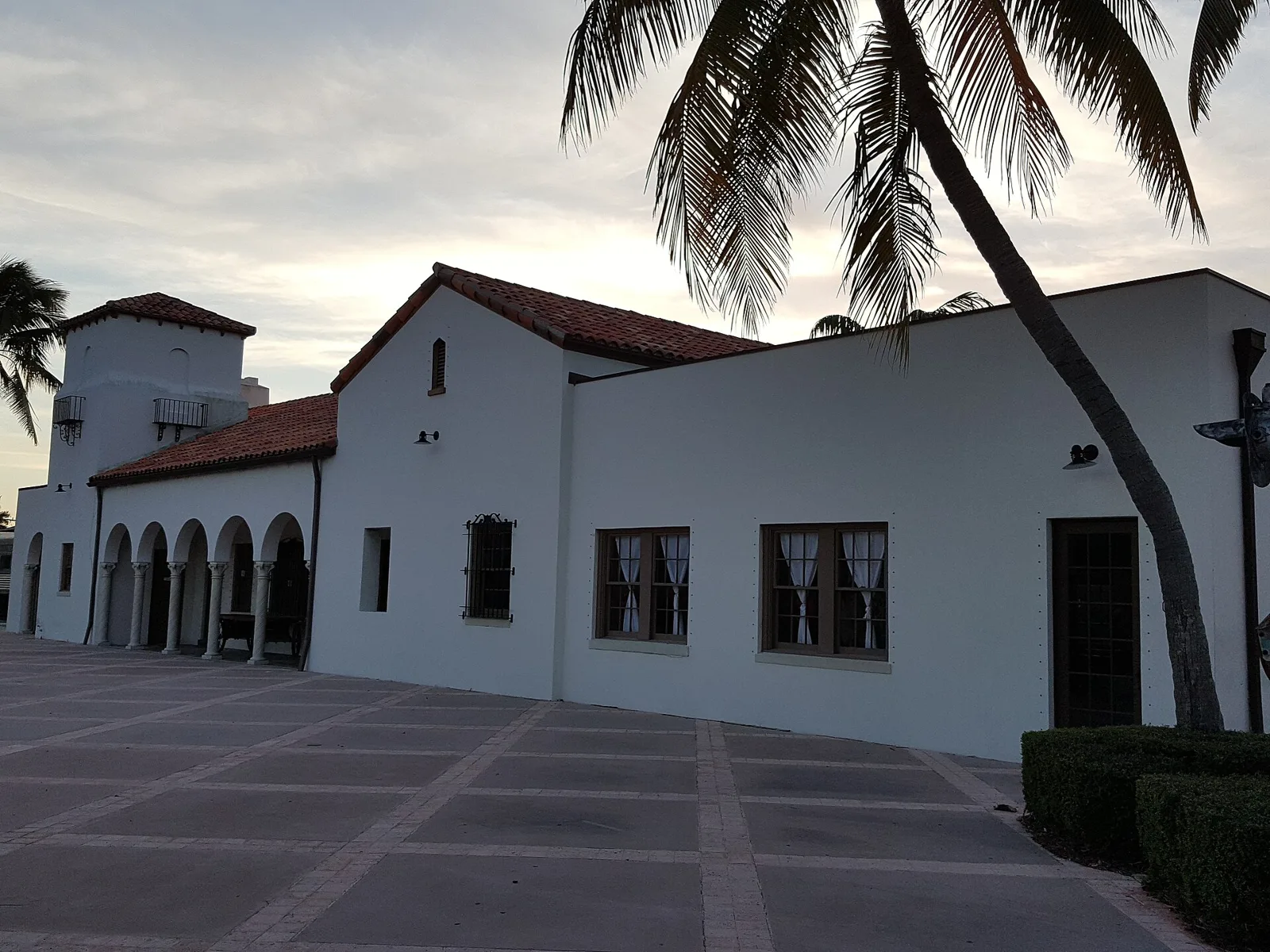
Boca Raton was incorporated in May 1925, at the height of the land boom. Its 10 National Register listings, the history museum and where to visit.
Last checked Oct. 8, 2026. History comes from the Boca Raton Historical Society and the City of Boca Raton; National Register listings from the National Park Service’s listed-properties file (May 22, 2026 edition).
Boca Raton went from a farming village of 18 people in 1903 to a city of about 100,000, according to the Boca Raton Historical Society. Its look still owes much to one architect, Addison Mizner, whose 1920s plans set the Mediterranean Revival style the city keeps today.
Visit
- The Schmidt Boca Raton History Museum, Historic Town Hall, 71 N. Federal Highway: 10 a.m. to 4 p.m. Wednesday to Saturday; adults $12, seniors and youth $8; free on the first Saturday of each month. Tours: 561-395-6766, ext. 107
- Boca Raton Historical Society: bocahistory.org
- City Historic Preservation Board: 5 p.m., second Wednesday, Community Center, 150 Crawford Blvd.
How Boca Raton began
From the Historical Society’s brief history unless noted:
- About 1,000 years ago to the 1700s: people of the Glades culture lived near the ocean.
- 1890s: the Florida East Coast Canal, today’s Intracoastal, and the Florida East Coast Railway opened the area to pioneers. The city’s cemetery history dates the town’s establishment to 1896, along Henry Flagler’s railroad.
- Early 1900s: a farming community, much of it growing pineapples. In 1904 Japanese immigrants led by Joseph Sakai formed a community along today’s Yamato Road.
- May 1925: the Town of Boca Raton was incorporated, at the height of the Florida land boom. The town council hired Addison Mizner to plan a resort city; his Cloister Inn opened in 1926 and is today The Boca Raton.
- 1926-27: the land boom collapsed, ending most of Mizner’s plans. Town Hall, built in 1927 to Mizner’s footprint by Delray architect William Alsmeyer, survives.
- 1942: the Army Air Corps opened its only wartime radar training school, the Boca Raton Army Air Field, on land that is now Florida Atlantic University and the Boca Raton Airport. The town had 723 residents in 1940.
- 1962: Florida Atlantic University chose the old air base site.
- 1967: IBM moved a computer facility to Boca Raton; the first IBM PC was developed there in 1981.
- 1980s and 1990s: downtown redevelopment, and the restoration of Town Hall and the railway station.
The name, the society says, comes from Boca de Ratones, a Spanish navigational term for a rocky or jagged inlet, first used for an inlet near present-day Miami Beach and later applied to Lake Boca Raton.
National Register of Historic Places
The National Park Service lists 10 properties in Boca Raton, from its listed-properties file:
| Property | Address | Listed |
|---|---|---|
| Boca Raton Old City Hall | 71 N. Federal Highway | Oct. 16, 1980 |
| Florida East Coast Railway Passenger Station | off State Road 808 (747 S. Dixie Highway) | Oct. 24, 1980 |
| Administration Buildings | Dixie Highway and Camino Real | June 27, 1985 |
| Fred C. Aiken House | 801 Hibiscus St. | Sept. 24, 1992 |
| Lavender House | 875 Alamanda St. | Feb. 24, 1995 |
| Seaboard Air Line Dining Car No. 6113 | 747 S. Dixie Highway | April 5, 2001 |
| Seaboard Air Line Lounge Car No. 6603 | 747 S. Dixie Highway | April 5, 2001 |
| House at 1240 Cocoanut Road | 1240 Cocoanut Road | Aug. 17, 2001 |
| Boca Raton Fire Engine No. 1 (“Old Betsy”) | 100 S. Ocean Blvd. | Nov. 1, 2001 |
| Pearl City Historic District | Northeast 15th Terrace, North Federal Highway, Northeast 10th Street and North Dixie Highway | Dec. 7, 2023 |
The Historical Society dates the buildings to about 1925 (Administration Buildings), 1926 (Aiken and Lavender houses, Old Betsy), 1927 (Town Hall), 1930 (the railway station), 1938 (1240 Cocoanut Road) and 1947 (the two rail cars), and the Pearl City district to about 1915, on its designated sites page. The society also says the World War II T Buildings at Florida Atlantic University have been on the National Register since 1994; they do not appear in the Park Service’s current listed file.
Old Betsy arrived in 1926 as the city’s first fire engine and was kept in the south bay of the old City Hall, according to the city’s Fire Rescue history.
Local landmarks
The city and county have designated more sites, listed by the Historical Society: Singing Pines at 498 Crawford Blvd., the Raulerson House at 290 SW Third St., the Old Floresta Historic District north of Palmetto Park Road between Paloma and Cardinal avenues, the Spanish Village (Warren House) at 200 NW Seventh St., and Camino Real from Dixie Highway to the Geist Bridge, a county landmark.
Places to visit
- Historic Town Hall and the history museum, 71 N. Federal Highway: exhibits on the pioneer era, Mizner, the Army Air Field and IBM. Free parking behind the museum.
- The railway station and rail cars, 747 S. Dixie Highway, restored in the 1980s and 1990s.
- Boca Raton Cemetery and Mausoleum, 451 SW Fourth Ave.: graves were moved here from the Army Air Field site by 1943; the city has run it since 1948, according to its cemetery history.
- Historical markers stand at Town Hall and in Pearl City.
Frequently asked questions
When was Boca Raton founded? The town dates to the 1890s railroad era and was incorporated in May 1925.
What does Boca Raton mean? It comes from Boca de Ratones, a Spanish term for a rocky or jagged inlet.
What is on the National Register? Ten listings, from Old City Hall (1980) to the Pearl City Historic District (2023).
Where is the history museum? At the Schmidt Boca Raton History Museum, 71 N. Federal Highway, open Wednesday to Saturday.
Was the first IBM PC made in Boca Raton? Yes, in 1981.
Related: population and growth, parks and trails and things to do this month.
Have your say